
Table of Contents

Reimagining occupational safety through the lens of education, research, and sustainable development.
India’s rise as a technological and economic powerhouse is one of the defining stories of the twenty-first century. Yet, amid discussions on semiconductors, AI, defence technologies, and innovation ecosystems, one critical element often remains overlooked: safety.
In an age where India wishes to stand as a testament to resilience, safety can no longer be treated as a national liability. It must be recognised as a national capability.
According to data compiled by the Ministry of Labour & Employment’s Directorate General Factory Advice Service & Labour Institutes (DGFASLI), between 2017 and 2020 India reported an average of 1,109 deaths and more than 4,000 injuries annually in registered factories alone — translating to approximately three deaths and eleven injuries every working day. Critically, these statistics cover only the formal sector; nearly 90 per cent of India’s workforce operates in the informal economy and remains outside inspection coverage entirely.
“For many workers in India, earning a wage still means risking one’s life. Over 2.3 lakh workplace accidents and more than 22,000 fatalities were recorded between 2019 and 2025 — most of them preventable.”HowToSurvive.in, citing ILO, Ministry of Labour, NDMA, 2025
An aspiring Vishwaguru cannot afford this toll. The argument for safety, therefore, is not merely humanitarian. It is strategic, economic, and deeply educational.
II Educational Institutions and Safety Culture
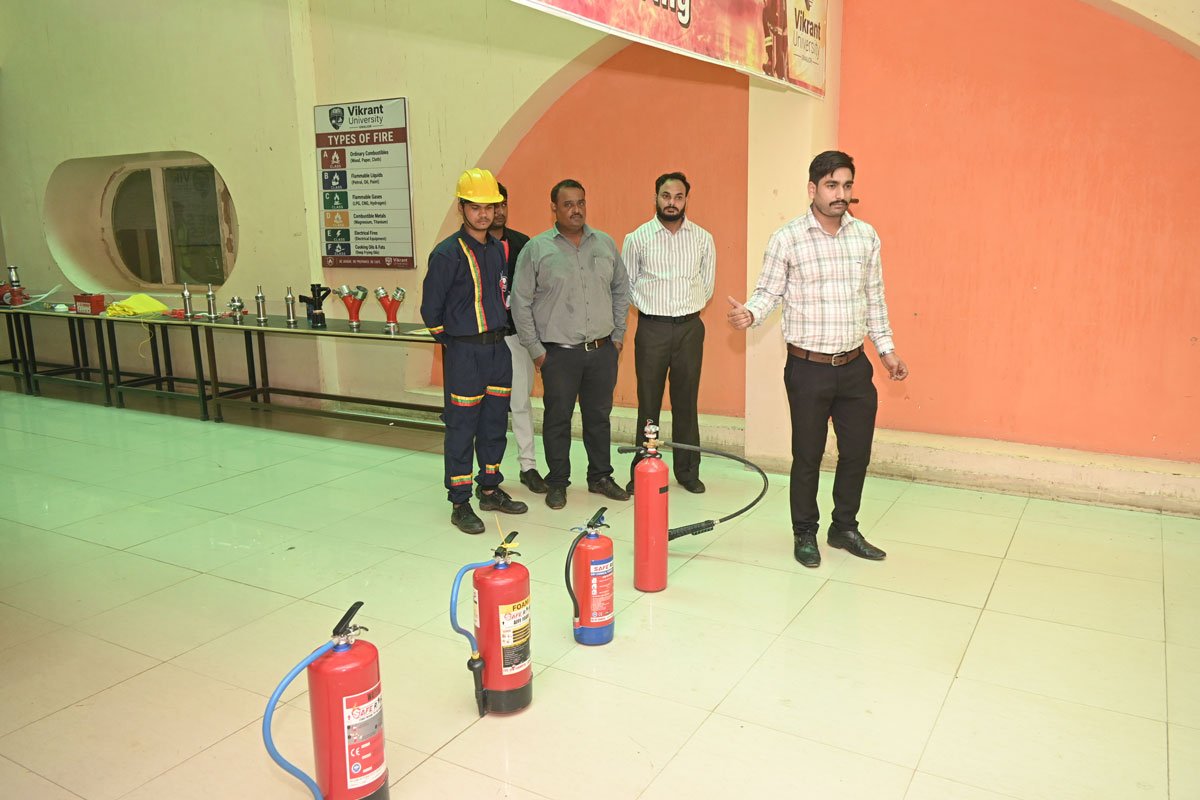
Educational institutions are the first and most powerful incubators of professional values. If safety consciousness is not embedded at this foundational stage, no amount of regulatory prescription in the workplace can fully compensate for its absence.
Universities offering programmes in engineering, chemistry, mining, construction, and allied sciences carry a particular responsibility. Embedding mandatory occupational safety modules into core curricula — not as an elective afterthought but as a credited, examined subject — is one of the most direct levers available to India’s higher education system.
III Preparing a Workforce for Risk
A 2019 ASSOCHAM study found that 80 per cent of Indian engineering graduates were not employable for core technical roles, revealing a fundamental gap between academic preparation and real-world industry expectations. Safety competence is a central component of that gap.
The National Education Policy (NEP) 2020 addresses this deficiency by mandating the integration of vocational education and skill training from Class VI onwards, with a target of 50 per cent student enrolment in vocational programmes by 2030. Safety skill development — hazard identification, risk assessment, emergency response, ergonomics, and PPE usage — falls squarely within the spirit of these mandates.
50% of all employees globally will require reskilling by 2025, per the World Economic Forum’s Future of Jobs Report 2023 — making safety training a productivity investment, not just a welfare measure.
IV Research and Innovation
The ICMR-National Institute of Occupational Health (ICMR-NIOH), headquartered in Ahmedabad, is the country’s apex body for research on occupational and environmental health.
Predictive models are being developed to pre-empt hazards in manufacturing, mining, and construction — sectors that together account for approximately 70 per cent of all workplace deaths in India. The convergence of AI with safety engineering represents a genuine scientific frontier.
“India’s OSH market is projected to reach USD 17.86 billion by 2030, growing at a CAGR of 11.1 per cent.”OSH India 2024, Bombay Exhibition Centre
V Industry–Academia Collaboration
A Times of India analysis noted that India’s industry–academia linkage scored only 4.7 out of 10, indicating a structural disconnect with direct consequences for worker preparedness. NEP 2020 mandates the establishment of Sector Skill Councils (SSCs) to bring together industry stakeholders, academia, and training providers to develop industry-relevant curricula.
VI Safety and Sustainable Development
The Occupational Safety, Health and Working Conditions (OSH) Code, 2020 — enforced in November 2025 — consolidates 13 existing central labour laws into a single framework, extending protection to 80 million workers, up from 60 million under previous legislation.
The connection between safety, education, and the Sustainable Development Goals is direct. SDG 4 calls for quality education; SDG 8 mandates decent work and safe working environments; SDG 3 addresses good health and well-being.
Safe workers are more productive workers. Educated communities are more safety-conscious communities. And safety-conscious industries are, over time, more competitive and more resilient ones.
VII Conclusion: Securing India’s Future Through Safety
India’s technological ambitions and its safety imperative are not competing priorities. They are inseparable dimensions of the same national project.
For prevention was, and is still, better than cure. The investment India makes today in safety education, research, and industry-ready skill development will determine not simply how many workers survive the next decade, but how securely the country claims its place at the vanguard of global development.
References
- DGFASLI / Ministry of Labour & Employment. Annual Statistics on Factory Accidents, 2017–2020.
- ASSOCHAM India. Engineering Education in India: Supply, Quality and Employability. 2019.
- Ministry of Education, Government of India. National Education Policy 2020.
- World Economic Forum. The Future of Jobs Report 2023. Geneva: WEF, May 2023.
- PIB, Government of India. OSH Code, 2020. November 2025.
- ICMR. ICMR-NIOH: National Institute of Occupational Health. 2024.
About the Author
Mr. Vishal Tiwari
Assistant Professor, Industrial Engineering, Vikrant University, Gwalior (M.P.)
A dedicated Fire & Safety Engineer with over 3.5 years of experience in industrial safety, academic teaching, and fire prevention systems. Currently serving as an Assistant Professor at Vikrant University, Gwalior, with prior experience at Adani Power Plant (4620 MW), Mundra. Skilled in fire safety audits, emergency response planning, and training programs on firefighting, rescue, and first aid. Strong expertise in EHS practices and fire protection systems.