
Table of Contents

India stands at a defining moment in its civilizational journey. As the nation approaches the centenary of its Independence in 2047, the vision of a Viksit Bharat — a developed India — is no longer a distant aspiration but a national mission demanding collective resolve, visionary leadership, and sustained action.
That future will not be decided by growth figures or infrastructure alone. It will be shaped by the quality of India’s education system, the strength of its security architecture, the vibrancy of its innovation ecosystem, and its ability to lead in critical technologies. Geopolitical tension, cyber warfare, artificial intelligence, and economic competition are reshaping the global order — and meeting that moment requires a generation that is educated, technologically empowered, nationally conscious, and globally competitive.
“The future of India will not be written by demographics alone; it will be shaped by educated minds, secured by vigilant citizens, driven by innovation, and powered by indigenous technology.”— Col Amit Kumar, Veteran & Advocate
Education: The Most Powerful Instrument of Nation-Building
Every developed nation has invested in human capital before achieving economic and technological leadership, and India’s National Education Policy (NEP) 2020 marks one of its most ambitious reforms since Independence — shifting from rote memorisation toward critical thinking, creativity, and multidisciplinary learning. Platforms such as DIKSHA, SWAYAM, PM SHRI Schools, and NIPUN Bharat are helping widen access, though urban-rural gaps in trained teachers and digital infrastructure remain a real challenge.
Preparing India for the future means embedding AI and digital literacy early, prioritising problem-solving over rote learning, and building research-oriented, ethics-grounded, security-aware citizens — with teachers recognised and empowered as architects of that future, not merely instructors.
National Security: Beyond Borders and Battlefields
Security today reaches far past territorial defence — into cyber security, economic resilience, information warfare, energy and food security, maritime power, and technological sovereignty. India’s push on indigenous defence manufacturing and force modernisation has strengthened this base, but the next generation of conflict will test it further, through AI-enabled warfare, autonomous weapons, attacks on critical infrastructure, and economic coercion via technology and supply chains.
Meeting this requires sustained investment in AI, quantum computing, cyber security, semiconductors, robotics, and space technology — and a recognition that security is no longer the exclusive job of the armed forces. Every citizen’s digital vigilance and constitutional commitment now matters to national defence.
Innovation and Technological Leadership
Innovation has become the primary driver of economic and strategic strength, and India’s start-up ecosystem — spanning healthcare, agriculture, fintech, and defence technology — reflects that shift, as does the global benchmark set by its Digital Public Infrastructure in payments, identity, and governance. The next step is moving from adaptation to origination: becoming a creator of technology and intellectual property, not just a consumer of it, through deeper academia-industry-government collaboration and research support beyond elite institutions alone.
Technological power now defines global influence, and India’s achievements in space — from Chandrayaan to Aditya-L1 — alongside its digital governance and vaccine development, point to real capability. Sustaining it will mean raising R&D spending, building semiconductor and AI ecosystems, and pursuing cyber resilience and data sovereignty — all while keeping technology anchored to ethics, inclusiveness, and sustainability rather than treating progress as an end in itself.
The Convergence: Four Pillars, One Cycle
Education, security, innovation, and technology are not separate domains — they form a single reinforcing cycle:
- Education produces skilled citizens.
- Skilled citizens drive innovation.
- Innovation strengthens technological leadership.
- Technological leadership enhances national security.
- Security, in turn, creates the stability that growth and innovation need.
A student coding in a rural classroom today may become tomorrow’s cybersecurity expert; a young innovator in an incubation centre may build technology that strengthens national defence. Every rupee invested in education is, in that sense, also an investment in security and prosperity.
THE WAY FORWARD — TEN PRIORITIES
- Achieve universal foundational literacy and numeracy.
- Strengthen teacher training and educational infrastructure.
- Raise national R&D expenditure to global standards.
- Build a comprehensive National Security Strategy spanning technology and economics.
- Promote indigenous manufacturing of critical technologies.
- Expand AI, semiconductor, quantum, and cybersecurity ecosystems.
- Encourage innovation-driven entrepreneurship in every region.
- Deepen collaboration between academia, industry, and government.
- Ensure equitable access to digital infrastructure and opportunity.
- Build a culture of responsible citizenship and national consciousness.
Conclusion: Igniting Minds, Securing the Future
A nation’s destiny is shaped by the quality of its people and the strength of its institutions. India’s rise as a developed nation will not come from economic growth or infrastructure alone — it will be realised through educated minds, secure borders, innovative thinking, and technological excellence. The task ahead is to prepare India’s youth not merely to seek employment but to create opportunity, lead innovation, and defend the national interest.
As India marches toward 2047, the call is simple: educate, innovate, secure, and lead. Jai Hind.
About the Author
Col Amit Kumar (Veteran)
Judge Advocate General’s (JAG) Branch, Indian Army · Advocate · Author
Col Amit Kumar is a retired officer of the Judge Advocate General’s Branch of the Indian Army, respected for his distinguished service, legal acumen, and advocacy for soldiers’ rights. Commissioned into the SIKHLI Infantry Regiment in 2000 through the Indian Military Academy, he served as an Intelligence Officer, Ghatak Platoon Commander, Adjutant, and Company Commander before joining the JAG Branch in 2008, where he held senior legal appointments including Deputy Judge Advocate General at HQ Andaman & Nicobar Command, HQ 12 Corps, and HQ 16 Corps.
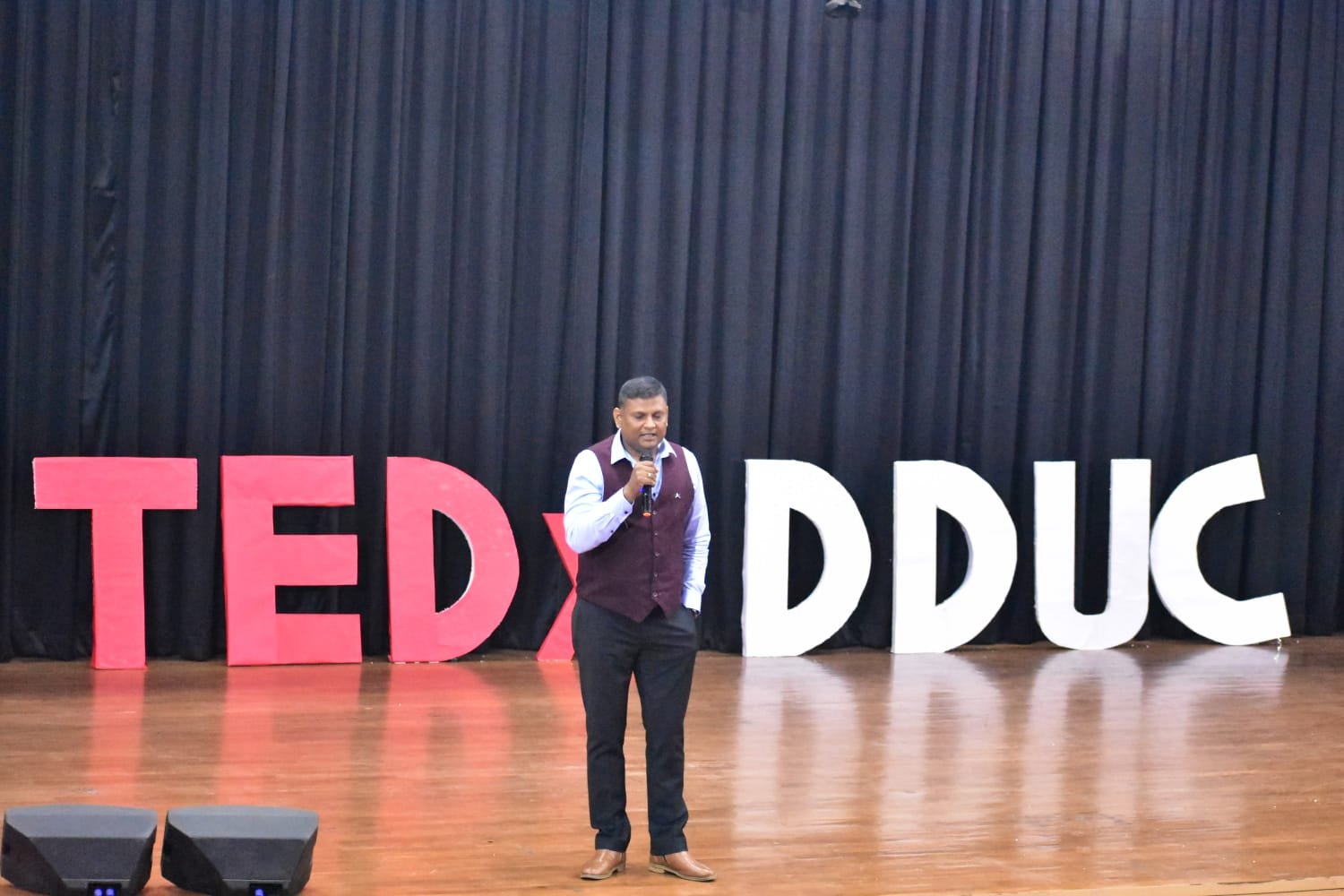
He is the author of the Handbook of Military Law, which ranked among Amazon’s Top 10 Military Law titles, and led landmark legal interventions including the Supreme Court writ petition in the Major Aditya Shopian case and a collective petition by 1,250 serving soldiers against vexatious prosecution. His decorations include three Chief of Army Staff Commendation Cards and an Army Commander’s Commendation Card. He is a TEDx speaker and public commentator on military ethics, national security, and soldiers’ rights, and is married to Col Annu Dogra, JAG Branch — together recognised as the world’s first Colonel-rank JAG couple in the Armed Forces.