


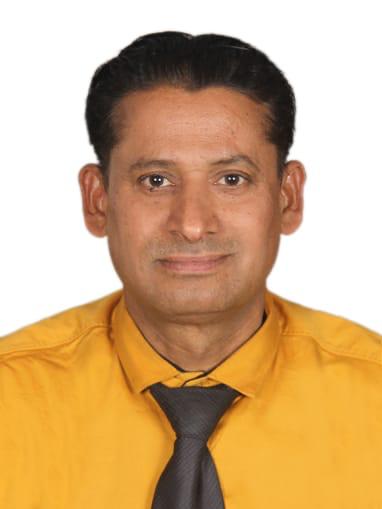
Mr. Lalit Vikram Bharadwaj
NGO professional, educator, lawyer, poet, motivational speaker, and social scientist.
Holistic Development in the Modern Era
From the Gurukulam forests of ancient Bharat to an AI-driven world threatening educated illiteracy — the case for reclaiming experiential, skill-based, and character-centred learning has never been more urgent.
Since antiquity, India has been distinguished by its richness in intellectual, cultural, and spiritual traditions, earning the revered title of Vishwaguru — a global teacher and disseminator of knowledge (Radhakrishnan, 1951). The earliest structured systems of language and grammar were developed on the sacred land of Bharat, most notably through Paṇini’sAṣṭādhyāyī (5th century BCE), widely recognised as one of the most sophisticated grammatical treatises in the history of linguistics (Cardona, 1997; Staal, 1989). Sanskrit texts — the Vedas, Upaniṣads, Vedāṅgas, and later philosophical treatises — were composed for the advancement of universal knowledge, addressing fundamental questions of existence, ethics, science, and consciousness (Radhakrishnan& Moore, 1957). Ancient centres of learning flourished along the banks of holy rivers: Taḥḣaśilā and Nālandā attracted scholars from across Asia and functioned as early international universities (Altekar, 1944; Sen, 1988). This enduring intellectual, moral, and spiritual excellence continues to testify to India’s foundational contributions to global civilisation and human thought (Upaniṣads; Bhagavad Gītā).
India’s ancient education system was fundamentally scientific in its approach and firmly grounded in logic and rational inquiry. Knowledge was imparted through specialised disciplines — mathematics, Ayurveda, astronomy, yoga, and holistic wellness — all integrated with ethical instruction. The Upaniṣads were composed to cultivate moral discernment, intellectual depth, and character development, shaping individuals capable of contributing as enlightened members of global society. This tradition aligned closely with what Albert Einstein would centuries later affirm: that imagination is more powerful than knowledge, and that the capacity for original thought and paradigm-shifting reasoning far outweighs the accumulation of existing information. India’s traditional Gurukulam system embodied this principle through experiential learning, mentorship, ethical grounding, and holistic human development. Unfortunately, this indigenous knowledge framework was systematically dismantled during the colonial period, when education was reoriented toward producing clerical functionaries rather than independent thinkers — resulting in a profound loss of intellectual heritage and human-centred educational philosophy.
“Without a deliberate emphasis on creativity, adaptability, and skill development, societies risk producing individuals who are formally educated yet functionally ill-equipped for real-world challenges — a condition of educated illiteracy.”
In many modern schooling systems, education has become predominantly informational rather than formative — emphasising the accumulation of facts over the development of practical competence. Students should be systematically trained in practical skills enabling self-reliance: effective use of household tools, basic culinary skills, elementary vehicle maintenance, and routine quantitative calculations relevant to everyday decision-making. Educational institutions should also incorporate regular assessments of physical health and well-being as part of holistic student development, and assessment frameworks should prioritise applied and experiential knowledge demonstrated through practical performance rather than solely through theoretical examination. In the contemporary era, rapid advancements in artificial intelligence are redefining the nature of learning, work, and human competence — AI systems increasingly outperform humans in routine information processing and repetitive cognitive tasks. Education systems that continue to prioritise content-heavy, examination-driven learning risk becoming obsolete, producing a condition of educated illiteracy. Recognising these challenges, India’s National Education Policy (NEP) 2020 advocates a decisive shift from rote-based learning to competency-based, experiential, and multidisciplinary education, emphasising critical thinking, creativity, problem-solving, ethical reasoning, and digital literacy as core learning outcomes.
In the contemporary employment landscape, employers increasingly seek individuals who demonstrate the ability to analyse complex situations, apply interdisciplinary knowledge, and devise effective solutions — rather than those who merely possess theoretical understanding detached from practice. This shift is particularly evident in high-stakes professions such as healthcare: when a medical practitioner encounters a critical situation in which standard treatment protocols yield limited results, the ability to integrate alternative therapeutic approaches alongside allopathic methods reflects a higher level of professional competence and leadership. In the age of artificial intelligence, individuals who lack the capacity to apply knowledge dynamically and solve problems independently risk becoming redundant, regardless of their academic credentials. The possession of degrees alone is no longer sufficient to define employability; demonstrable competence and real-world effectiveness must become the primary criteria for evaluating candidature. There is therefore an urgent policy-level imperative to shift toward skill-based, experiential, and problem-oriented education — drawing upon both modern technological realities and India’s indigenous educational traditions — to ensure that learning remains relevant, inclusive, and future-ready.
References
- Radhakrishnan, S. (1951). The Philosophy of Rabindranath Tagore. London: Macmillan. [Referenced for India’s historical role as a global teacher and disseminator of knowledge.]
- Cardona, G. (1997). Paṇini: His Work and Its Traditions. Delhi: MotilalBanarsidass. [Referenced for Paṇini’sAṣṭādhyāyī and systematic language analysis.]
- Staal, F. (1989). Rules Without Meaning: Ritual, Mantras and the Human Sciences. New York: Peter Lang. [Referenced for systematic language analysis and Sanskrit grammar traditions.]
- Altekar, A. S. (1944). Education in Ancient India. Varanasi: Nand Kishore & Bros. [Referenced for ancient centres of learning including Takṣaśilā and Nālandā.]
- Upaniṣads; Bhagavad Gītā. Ancient Texts of Indian Philosophy. [Referenced for global civilisation, human thought, and ethical-philosophical traditions of Bharat.]
- Ministry of Education, Government of India. (2020). National Education Policy 2020. New Delhi: Ministry of Education. [Referenced for India’s competency-based, experiential, and multidisciplinary education reform agenda.]
About the Author
Dr.Shivangi Bharadwajis a Research Scholar in Civil Engineering at Delhi Technological University, Delhi, with an M.Tech and B.Tech degree and over nine years of teaching experience in higher education. She has published SCIE-indexed and Scopus-indexed research papers with Springer, and her work focuses on bridging classroom knowledge with real-world applications, promoting experiential learning and interdisciplinary thinking.
Mr. Lalit Vikram Bharadwaj is a distinguished NGO professional, educator, lawyer, poet, motivational speaker, and social scientist. He holds a Master’s degree in English and a Doctorate in Yoga, with expertise bridging the humanities, law, and holistic sciences. His work centres on personality development, ethical leadership, and the promotion of mental and physical well-being.