
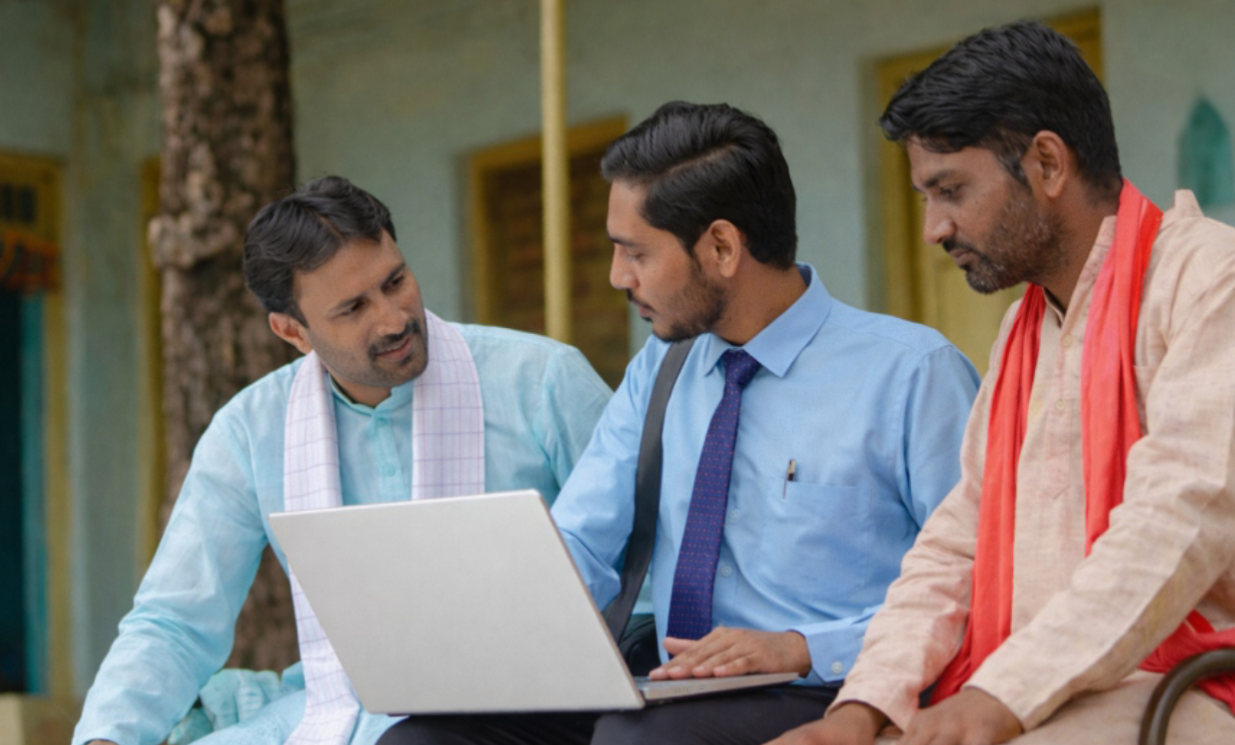

A Case for Skill, Digital Inclusion & the Bottom of the Pyramid
As India races toward Viksit Bharat, 171 million people could escape extreme poverty if every student simply learned to read — yet the digital divide, learning poverty, and intergenerational cycles still hold millions back.
Moving ahead into Viksit Bharat, there lie many questions unanswered — questions about how global welfare imperatives must be addressed through transparent, structural, and dialectical moves in a polarised world order faced with multiple disruptions. As the economy transcends towards new dimensions, poor people still suffer due to SDG goal violations, where basic education keeps on dwindling toward net-zero achievements. Biodiversity plays a critical role and the economic welfare of the environment is also at the fulcrum of knowledge transfer. Herein lies a great role for intellectual viability to bring about an entrepreneurial ecosystem, where a skill-based educational approach will govern the future of institutional validity. Where theory is being challenged every day, practical knowledge mapped to skill gaps is becoming ever more relevant in a diverse country like India. The right call is to bring diverse multidisciplinary resources toward an innovation that is intrapreneurial and targeted toward the marginalised bottom of the pyramid. The Gandhian model of trusteeship may prove a great innovation that can steer India’s growth amidst world polarity — where the entrepreneurial university coupled with intrapreneurship will take a vibrant India ahead.
Digital transformation is a critical driver for achieving United Nations Sustainable Development Goal 1: Zero Poverty by 2030. While technology can accelerate economic growth and create jobs, its success depends on bridging the digital divide to ensure vulnerable populations are not left behind. Digital tools like mobile money and Fintech allow the unbanked to store money, receive credit, and conduct transactions without physical bank branches — India’s JAM trinity of Jan Dhan accounts, Aadhaar, and mobile phones has enabled direct benefit transfers to over 800 million people. Digital platforms are also providing smallholder farmers with real-time weather data, market prices, and pest control information, increasing yields and reducing waste, while telemedicine initiatives such as eSanjeevani bring quality healthcare to remote areas. However, approximately 2.9 billion people still lack internet access, and automation risks displacing low-skilled labour disproportionately among the poor. Strategic solutions must include universal broadband investment, government-funded digital literacy training, and inclusive policies that ensure digital growth benefits are distributed equitably across all income levels.
“If all students in low-income countries possessed basic reading skills, nearly 171 million people could escape extreme poverty. Each additional year of schooling increases an individual’s lifetime earnings by approximately 10% — with even higher returns for women.”
Education is a primary catalyst for poverty eradication, directly addressing SDG 1 (No Poverty) and SDG 4 (Quality Education). Research indicates that if all students in low-income countries possessed basic reading skills, nearly 171 million people could escape extreme poverty. Each additional year of schooling can increase an individual’s lifetime earnings by approximately 10%, with even higher returns for women. Children of educated parents are significantly more likely to complete their own schooling and secure high-paying jobs, preventing poverty from being passed down through generations. Educated mothers are better equipped to manage hygiene, nutrition, and healthcare, reducing childhood stunting and the long-term medical costs that often trap families in debt. Against this backdrop, India’s NIPUN Bharat programme is targeting universal foundational literacy by 2026–27 to combat learning poverty — a condition where 56% of 10-year-olds in India currently cannot read basic text. Meanwhile, AI-driven personalised learning is shifting from pilot tool to system-defining infrastructure, helping bridge the gap in regions where student-to-teacher ratios reach 60–100:1, and new vocational integration policies are making skills training mandatory in secondary schools by 2027.
Critical barriers remain formidable. Global education is underfunded despite its proven impact — if all adults completed secondary education, world poverty could be cut by more than half. Extreme poverty forces families to choose food over schooling, leading to high dropout rates; in India, secondary school enrolment in rural areas remains low at 52.2%. As of 2025, over 64% of India’s population is covered by at least one social protection benefit, helping sustain educational participation even during economic shocks. Skill development stands as one of the most powerful tools for poverty eradication — equipping individuals with market-relevant abilities, fostering self-reliance, boosting employability, and promoting entrepreneurship toward sustainable livelihoods and inclusive economic growth. Programmes like DDU-GKY and PMKVY, alongside NGO-led vocational training initiatives, address both urban and rural poverty by creating job-ready youth and empowering marginalised groups, particularly women. The imperative, ultimately, is clear: an integrated approach combining quality education, digital inclusion, skill development, and social protection — anchored in India’s indigenous intellectual traditions and powered by emerging technology — is the most credible pathway toward curing poverty and achieving the promise of Viksit Bharat.
References
- United Nations. (2015). Transforming Our World: The 2030 Agenda for Sustainable Development. New York: United Nations. [SDG Goal 1: No Poverty; Goal 4: Quality Education.]
- World Bank. (2022). The State of Global Learning Poverty: 2022 Update. Washington DC: World Bank Group. [Referenced for learning poverty statistics and foundational literacy data.]
- Ministry of Education, Government of India. (2020). National Education Policy 2020. New Delhi: Ministry of Education. [Referenced for competency-based, vocational, and experiential learning reform.]
- Ministry of Skill Development and Entrepreneurship, Government of India. (2023). Pradhan Mantri Kaushal Vikas Yojana (PMKVY) & DDU-GKY Programme Reports. New Delhi: Government of India.
- International Telecommunication Union (ITU). (2023). Measuring Digital Development: Facts and Figures 2023. Geneva: ITU. [Referenced for global internet access and digital divide data.]
- Ministry of Finance, Government of India. (2023). JAM Trinity and Direct Benefit Transfer Report. New Delhi: Government of India. [Referenced for Jan Dhan-Aadhaar-Mobile DBT coverage data.]
About the Author
Dr. Samrat Ray is a Global Academic Leader with over 18 Years of experience in Higher Education, Research & Institutional Leadership across multiple continents. Currently serving as Vice President at the Asian School of Business Management, Pune, Maharashtra. He specializes in academic strategy, International collaboration and accreditation. With 150+ publications, an H-Index of 38, and extensive global partnerships, he is recognized for advancing research excellence & sustainable, data-driven academic institutions.