
Table of Contents

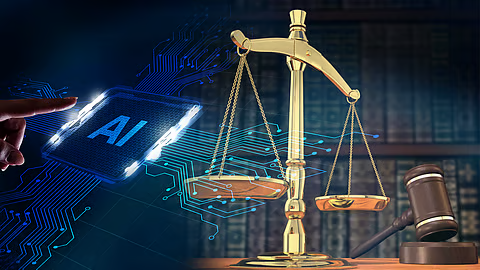
AI can strengthen access to justice — but only as an assistive mechanism, never a replacement for human judges.
Artificial Intelligence (AI) is rapidly transforming governance, public administration, and judicial systems across the world. In India, the judiciary has begun integrating digital technologies for case management, virtual hearings, legal research, and translation services. While AI promises efficiency, transparency, and accessibility, it also raises serious concerns relating to privacy, algorithmic bias, accountability, and constitutional morality.
This paper critically examines the growing role of AI within the Indian judicial framework and analyses its potential impact on justice delivery, while exploring the legal implications of automated decision-making and the necessity for a human-centered approach in judicial governance. The paper concludes that AI should function as an assistive mechanism rather than a replacement for human judges.
Introduction
The administration of justice has always been one of the most important functions of the State. In democratic societies, courts serve as guardians of constitutional values, protectors of fundamental rights, and institutions responsible for maintaining social order. However, judicial systems across the world continue to face challenges such as delayed justice, excessive case pendency, limited accessibility, procedural complexity, and shortage of judicial infrastructure.
India is no exception. The Indian judiciary currently handles millions of pending cases across district courts, High Courts, and the Supreme Court. Artificial Intelligence refers to the capability of computer systems to perform tasks that usually require human intelligence, including decision-making, learning, prediction, language processing, and pattern recognition. In the legal field, AI-powered tools can assist in legal research, document review, predictive analysis, translation, case categorization, and digital case management.
Technological Transformation of the Indian Judiciary
The e-Courts Mission Mode Project is one of the most significant judicial digitization initiatives in India. Major achievements include online case filing systems, digital cause lists, virtual court proceedings, electronic payment systems, and online access to judgments.
During the COVID-19 pandemic, Indian courts adopted virtual hearings to ensure continuity of justice delivery. Video conferencing technology enabled lawyers and litigants to participate remotely, reducing travel costs and improving accessibility.
Diplomacy: Mixed Results
The military success was not matched diplomatically. The 88-hour conflict ended in a ceasefire on 10 May 2025, but its authorship was disputed — U.S. President Donald Trump publicly claimed credit for brokering it, a claim India rejected, insisting the ceasefire was reached bilaterally on its own terms. Pakistan, by contrast, embraced the U.S. framing and even nominated Trump for the Nobel Peace Prize.
International condemnation of Pakistan following Pahalgam was notably weaker than after the 2008 Mumbai attacks, suggesting India’s diplomatic leverage hasn’t kept pace with its military capability. Complicating matters further, China reportedly supplied Pakistan with equipment, satellite imagery, and targeting support during the crisis — a reminder that bilateral frameworks alone can’t address the broader regional picture.
“SUPACE does not make judicial decisions. It merely supports judicial functioning.”
The Supreme Court Portal for Assistance in Court Efficiency (SUPACE) is an AI-based initiative introduced to assist judges with legal research and document analysis.
Benefits of AI in the Judiciary
Reduction in case pendency, improved legal research, enhanced accessibility, transparency and efficiency, and cost reduction are among the leading benefits. AI-powered legal databases can analyze thousands of judgments within seconds and identify relevant precedents. Automation of procedural tasks can reduce delays and allow judges to focus on substantive adjudication.
Challenges and Ethical Concerns
Despite its advantages, AI raises several legal and ethical concerns that cannot be ignored. Algorithmic bias is one of the most significant issues — AI systems are trained using historical data, and if such data reflects existing social inequalities, AI systems may reproduce those biases.
Another concern is accountability: if an AI-assisted recommendation results in injustice, determining liability becomes difficult. Privacy and data protection also remain major concerns because AI systems rely heavily on data collection and analysis, and judicial databases often contain sensitive personal information.
Machines cannot fully understand human suffering, emotional trauma, cultural complexity, and ethical dilemmas. AI lacks compassion and moral reasoning, both of which are essential elements of justice.
Constitutional Implications
The use of AI in the judiciary must comply with constitutional principles such as equality before law under Article 14 and the right to privacy under Article 21. Natural justice requires fair hearing, transparency, reasoned decisions, and absence of bias — opaque algorithmic systems may conflict with these principles if their decision-making processes remain unexplained.
Need for Ethical Governance
India requires a balanced and ethical framework for integrating AI into judicial systems. The following safeguards are essential: human oversight, transparency standards, data protection framework, bias audits, judicial training, and ethical guidelines.
Guiding Principle — The judiciary should adopt a human-centered AI model where technology enhances efficiency while preserving judicial independence, fairness, and dignity.
Conclusion
Artificial Intelligence has the potential to transform the Indian judiciary by improving efficiency, accessibility, transparency, and administrative functioning. At the same time, AI introduces significant ethical, legal, and constitutional concerns. Justice is fundamentally a human process that requires empathy, moral reasoning, and contextual understanding. Therefore, AI should serve as a supportive mechanism rather than a substitute for judges. If implemented responsibly, AI can strengthen access to justice and support judicial reforms while preserving the core values of fairness, equality, and rule of law.
References
- Justice K.S. Puttaswamy v. Union of India, (2017) 10 SCC
- Ministry of Law and Justice, Government of India.
- Supreme Court of India, e-Courts Mission Mode Project Reports.
- UNESCO Recommendation on the Ethics of Artificial Intelligence.
- European Commission Guidelines on Trustworthy AI.
About the Author
Sonali Dubey
Assistant Professor of Law, Madhav Vidhi Mahavidyalaya and Research Centre, Gwalior
Ms. Sonali Dubey is an Assistant Professor of Law at Madhav Vidhi Mahavidyalaya and Research Centre, Gwalior. She is actively engaged in teaching, research, and academic development in the field of law. Her areas of expertise include Constitutional Law, Human Rights, Legal Education, and contemporary legal issues. She has published research papers in reputed national and international journals and contributed chapters to edited books, and has also presented papers at national and international conferences.